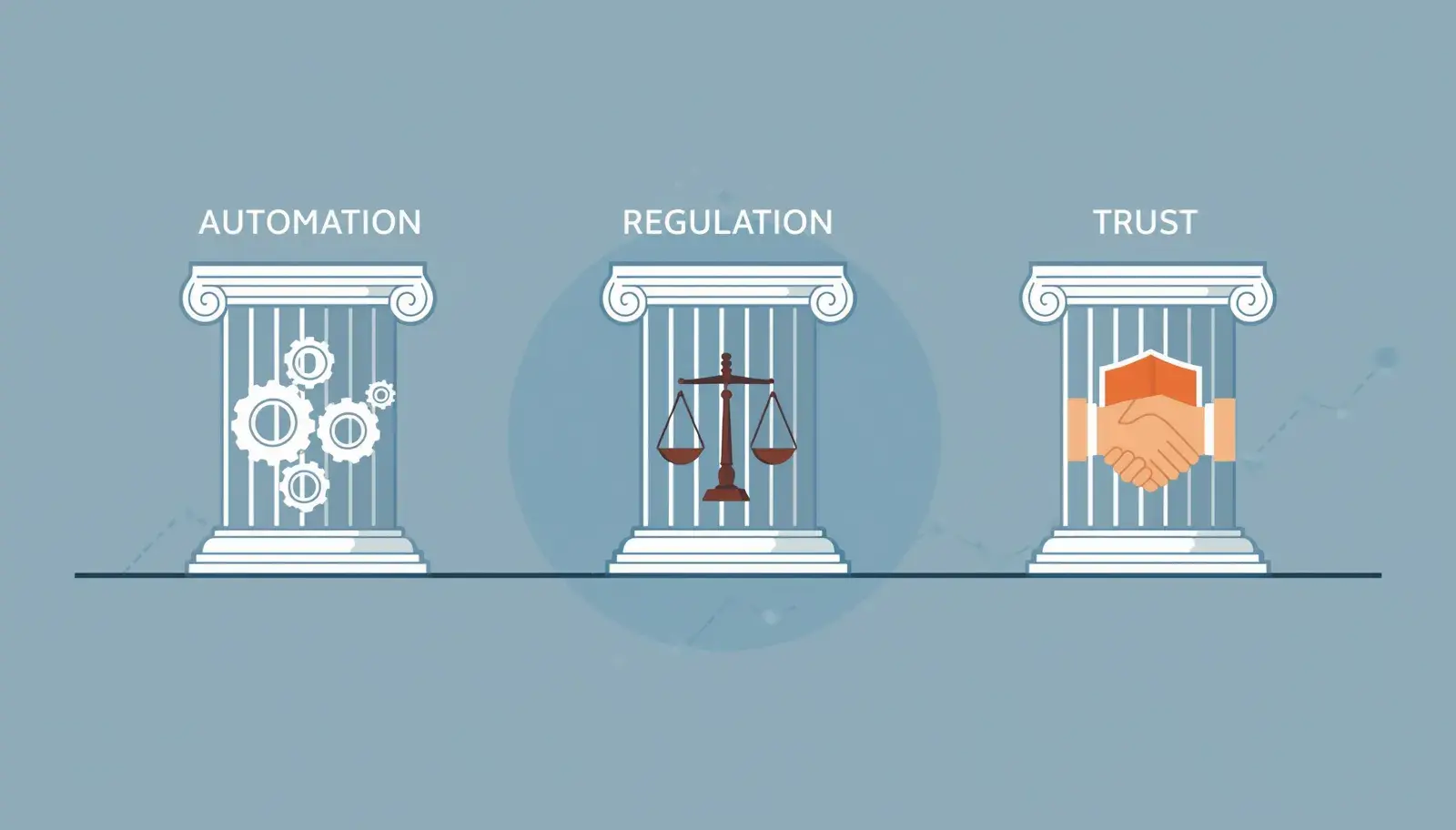
In earlier times, compliance was simpler. It was just limited to the interpretation of changed laws, updating policies, understanding gaps, and responding to findings. Today, it is about earning trust, scaling responsibility, and enabling innovation.
Modern Compliance can be understood by a trinity (A.R.T.): automation, regulations, and trust. Automation transforms how compliance is achieved, enabling scale, speed, and predictive oversight while Regulations define the rules and mechanisms to govern the conduct within which organisations must operate, while. At the same time, Trust builds the lasting value for regulations and automation. Maintaining integrity of an organisation lies in the trust of the customers, regulators, and stakeholders.
Compliance in a Rapidly Evolving World
Today’s fast-changing compliance landscape is creating new opportunities for organizations to manage it intelligently and efficiently. Instead of relying only on manual, time-consuming processes, businesses can now adopt automated compliance solutions that are faster, more accurate, and easier to scale.
Another important shift is the growing use of open data intelligence, the ability to use publicly available regulatory and industry data to generate meaningful insights. By bringing together information from multiple sources, organizations can stay ahead of changes, identify risks earlier, and make better compliance decisions.
Read our article about how Open Data Intelligence transforms decision-making.
| Regulations | Rules made by a government authority to control or govern conduct within its jurisdiction. |
| Automation | Use of technology to ensure that the systems meet regulatory requirements in a timely and efficient manner. |
| Trust | Confidence that the stakeholders hold in an organisation's actions. |
Reactive to Proactive Compliance
Organisations that embrace the ART of compliance can transform how they manage and mitigate risk:
- Real Time Monitoring: Technology-driven compliance tools track regulatory updates continuously to ensure that companies never miss any requirement.
- Automated Reporting: Routine compliance reports are generated automatically in less time to reduce errors.
- Risk Prioritisation: Intelligent systems analyse the data to highlight areas of highest regulatory risk, allowing focused action.
- Open Data Intelligence: Use of public sources and regulatory databases helps in providing actionable insights, improving decision-making, and foresight.
Drivers of Change in Compliance
The compliance landscape is evolving, driven by multiple forces that make traditional, manual approaches increasingly insufficient. Understanding these drivers highlights why the trinity of Automation, Regulations, and Trust is essential:
- Increasing Regulatory Oversight. Globalisation has made compliance more complex as companies now navigate through multiple regulatory requirements in different jurisdictions, requiring constant monitoring and adaptation.
- Digital Transformation. As businesses adopt digital processes, cloud technologies, and technology-driven systems, compliance must evolve to address new risks, data flows, and operational models.
- Stakeholders’ Expectation. Customers, investors, and regulators also expect greater transparency, ethical conduct, and accountability. Compliance is not just a legal requirement but a critical factor in building trust.
- Managing Competition and Technological Advancement. In a competitive landscape, staying updated with advanced compliance technologies ensures efficiency and shields the organization from regulatory setbacks.
Automation and Trust in Compliance
Trust is the ultimate measure of effective compliance. Beyond all the regulations and technological advancements, an organization earns stakeholders’ confidence by acting responsibly and ethically. The right use of automation moves the compliance processes from a reactive task into a proactive, data-driven function.
Yet, technology alone is not enough, trust will always remain the foundation. By ensuring automated processes are transparent, auditable, and aligned with regulatory and ethical standards, organisations can make compliance not just a requirement but a strategic enabler of informed decision-making.
Automation has a lasting impact on the BFSI sector, read our article to know how this demands growth for innovative products.
Conclusion
In today’s fast-moving world, finding a balance between regulations, automation, and trust has become important to create a strategic advantage. By leveraging technology for real-time monitoring and informed decision-making while maintaining transparency and ethical standards, organizations can stay ahead of regulatory changes, build stakeholder confidence, and drive sustainable growth.
The ART trinity of compliance is not just a framework, it is the foundation for resilient, responsible, and future-ready organizations.